Key Takeaways at a Glance
- Climate Insulation: Engineered polyhouses and nethouses reduce crop mortality by over 80% against unseasonal storms, hail, and extreme heatwaves.
- Exponential Yields: Micro-climate precision and vertical training deliver 4x to 8x higher marketable harvest per acre compared to open-field farming.
- Resource Conservation: Drip fertigation and soil-less cocopeat substrates cut fresh water and fertilizer requirements by 40%–60%.
- Compelling Commercials: With up to 50% NHB / State capital subsidies, commercial payback is frequently achieved within 18 to 24 months.
1. The Rising Imperative of Protected Agriculture
Open-field farming has long been the backbone of global food production, but today's agricultural realities present unprecedented volatility. Across India and neighboring arid zones, agriculturalists face intensifying challenges: erratic monsoon patterns, prolonged 45°C+ summer heatwaves, flash hailstorms, and invasive insect infestations that decimate conventional crops without warning.
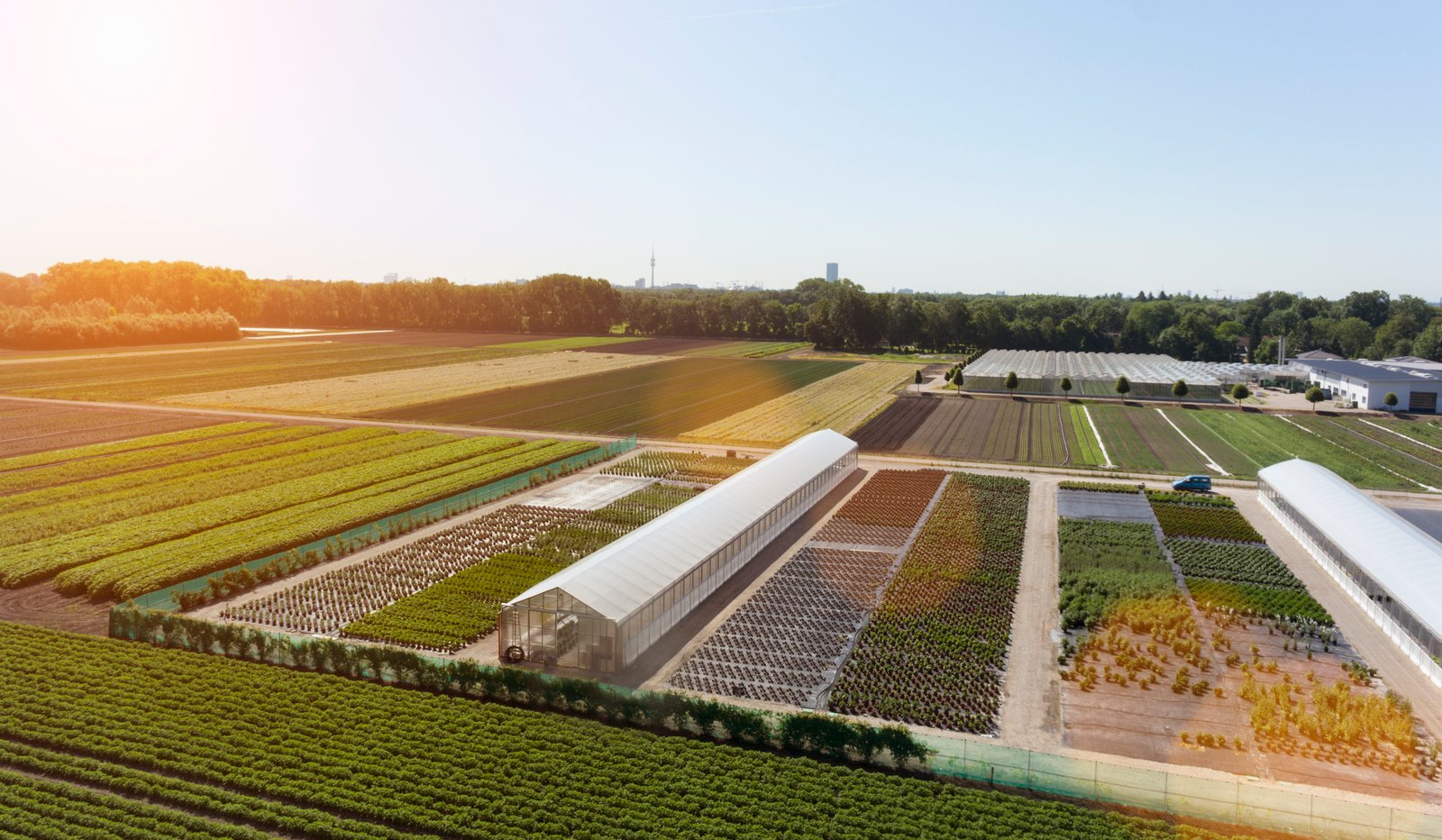
Under open-field conditions, farmers remain price takers. When weather is favorable, regional glut crashes wholesale mandi prices; when storms strike, entire harvests are lost. Protected agriculture changes the commercial paradigm completely. By placing high-value horticultural crops within specialized polyhouses, shade net structures, or insect-proof environments, growers substitute climate luck with scientific certainty.
2. Core Engineering Pillars of Modern Protected Structures
A high-performing commercial farm is not simply metal pipes wrapped in polythene; it is an integrated bio-industrial engineering system designed around crop physiology. The three primary structural categories include:
- Naturally Ventilated Polyhouses (NVPH): The commercial workhorse in India. Utilizing continuous top ridge ventilation, insect-proof side netting, and UV-stabilized 200-micron diffusive films, NVPH creates a natural chimney effect that expels hot air without continuous electrical consumption.
- Fan & Pad Climate-Controlled Polyhouses: Recommended for ultra-sensitive crops (Dutch roses, gerberas, strawberries, and seed breeding) or regions with severe summer extremes. Evaporative cellulose cooling pads and high-volume exhaust fans pull air across the canopy, lowering indoor temperatures by 8°C–12°C below ambient.
- Hi-Tech Flat-Roof & Dome Nethouses: Ideal for arid, high-wind regions. They provide 35%–50% solar radiation reduction, severe pest interception, and optimal air exchange at roughly 40% lower initial capital expenditure.
"Protected cultivation isn't just about sheltering plants; it is about engineering the exact micro-climate where crops reach their maximum genetic yield potential."
— Dr. Rajesh Sharma, Chief Agronomist
3. Commercial Comparison: Open Field vs. Protected Systems
To evaluate the economic transformation, consider real-world operational benchmarks observed across commercial colored bell pepper (capsicum) and English cucumber installations:
| Metric | Traditional Open Field | Naturally Ventilated Polyhouse | Fan & Pad Polyhouse |
|---|---|---|---|
| Bell Pepper Yield (MT/Acre) | 8 – 12 MT | 35 – 45 MT | 50 – 65 MT |
| Water Consumption | 100% (Baseline flood/furrow) | 40% – 50% Reduction | 60% Reduction (Closed loop) |
| Harvest Duration | 2.5 – 3 Months (Single flush) | 8 – 10 Months (Continuous) | 10 – 11 Months (Year-round) |
| Grade-A Export Quality | 35% – 45% | 80% – 88% | 90% – 95% |
| Pesticide Chemical Use | High (frequent spraying) | 60% Lower (screen barrier) | 75% Lower (sealed environment) |
| Average Payback Period | Unpredictable (Weather risk) | 18 – 24 Months | 24 – 30 Months |
4. Soil-less Substrates & Automated Fertigation
While traditional soil cultivation is supported in standard polyhouses, progressive commercial developers are adopting sterilized cocopeat growbags and hydroponic Dutch buckets. Soil-borne pathogens such as Fusarium wilt, nematodes, and bacterial wilt accumulate quickly in sheltered environments over successive seasons.
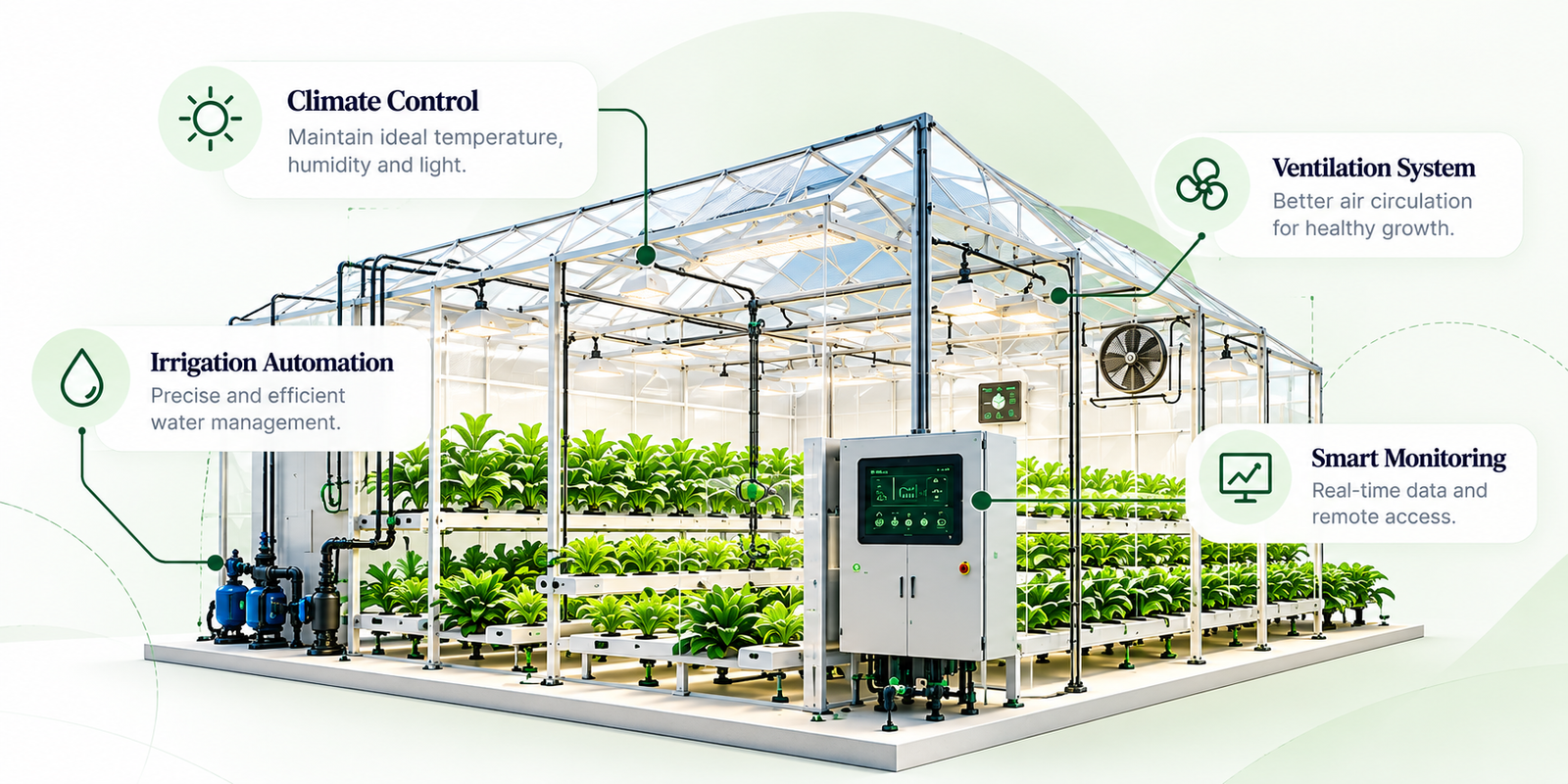
Soil-less media eliminate soil exhaustion entirely. When combined with automated PLC-based fertigation dosing systems, electrical conductivity (EC) and pH are calibrated directly to plant uptake stage: vegetative, flowering, and heavy fruit swelling.
5. Commercial Economics, Subsidies & Market Linkage
One of the strongest catalysts behind India's protected farming growth is the active financial support from the National Horticulture Board (NHB) and state horticulture missions (MIDH). Eligible entrepreneurs and farming organizations can leverage:
- Credit-Linked Capital Subsidies: Typically 50% of eligible project cost up to sanctioned ceilings (e.g., ₹56 Lakhs for 10,000 sq. meters / ~2.5 acres).
- Contract Farming & Premium Retail Offtake: Supermarket chains, QSR franchises, and export consolidators pay a 30%–60% premium for unblemished, zero-residue produce with consistent weekly supply commitments.
- Off-Season Pricing Advantage: Polyhouse growers harvest capsicum and cucumbers in peak monsoon or deep summer when open-field supply collapses and wholesale prices spike by 200%–300%.
6. 5 Critical Steps Before Breaking Ground
While commercial returns are attractive, success requires methodical pre-construction planning. Avoid common pitfalls by following this disciplined sequence:
- Comprehensive Water Quality Testing: Verify that Total Dissolved Solids (TDS) remain below 500 ppm and electrical conductivity is under 0.8 dS/m.
- Wind Speed & Topographical Site Survey: Structural engineering must calculate local wind loads (typically 120–150 km/h) and optimize gutter slopes for monsoon drainage.
- Select Tested Commercial Hybrid Seeds: Open-pollinated field varieties perform poorly inside greenhouses. Invest in indeterminate, parthenocarpic hybrids developed specifically for protected environments.
- Detailed Project Report (DPR) Formulation: Build bankable financials that clearly separate structural capex, agronomy opex, and subsidy reimbursement milestones.
- Engage Turnkey Agronomic Partners: Ensure structural contractors guarantee structural integrity, GI pipe zinc coating (minimum 275 GSM), and on-site agronomy mentorship through the initial harvest cycle.